Front End Axle and Bearing Noise
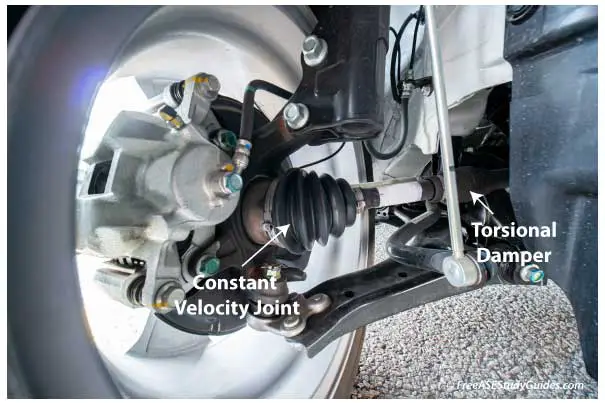
A typical front‑wheel‑drive (FWD) axle assembly consists of a half shaft equipped with an inner joint, an outer CV joint, and in some cases a torsional damper located near the center of the shaft. The most common failure in this type of axle is a worn or damaged outer constant‑velocity (CV) joint.
Outer CV Joint
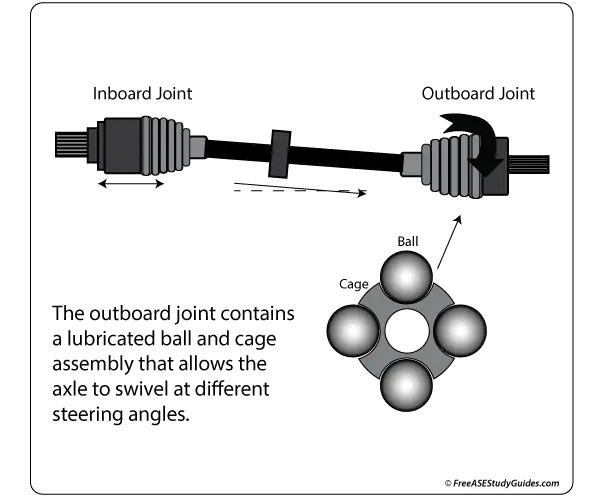
The outer CV joint allows the axle to transmit torque to the wheel while operating at an angle, such as during cornering. Its ball‑bearing cage design enables smooth torque transfer even when the steering is turned. When this joint becomes worn, it typically produces a clicking or popping noise while making slow, tight turns.
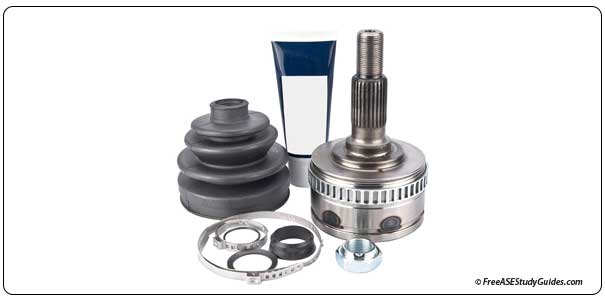
The most common outer joint design is the Rzeppa joint. It is packed with heavy grease and protected by a flexible boot. Over time, these boots can crack or tear, allowing grease to escape and exposing the internal bearings and cage to dirt and moisture. Once contamination occurs, rapid joint wear follows.
Inner CV Joint
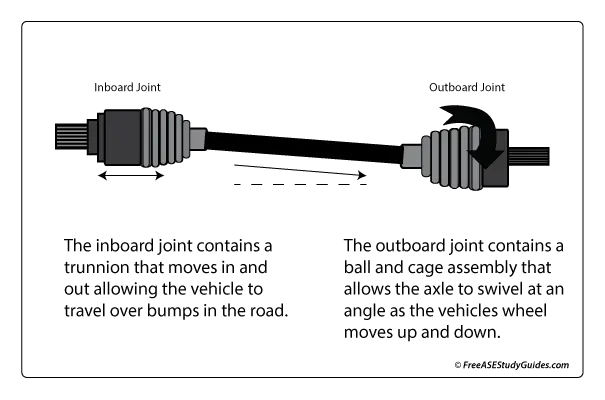
The inner joint consists of the tulip and the tripod assembly. This joint provides the axle torque and the in and out movement as the vehicle travels over bumps in the road. Excessive vibration during acceleration and deceleration indicates a problem with the inner joint. A loose, damaged, or missing torsional damper can also cause a shudder or vibration while traveling at highway speeds.
Sealed Wheel Bearings
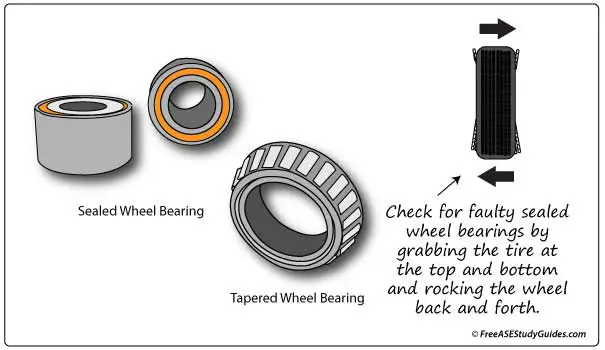
Modern vehicles use both sealed wheel bearings and serviceable tapered wheel bearings, each with distinct construction and maintenance requirements. Wheel bearings can fail due to inadequate lubrication, dirt or water contamination, or improper adjustment. The earliest symptom of bearing deterioration is typically a squealing or growling noise originating from the affected wheel.
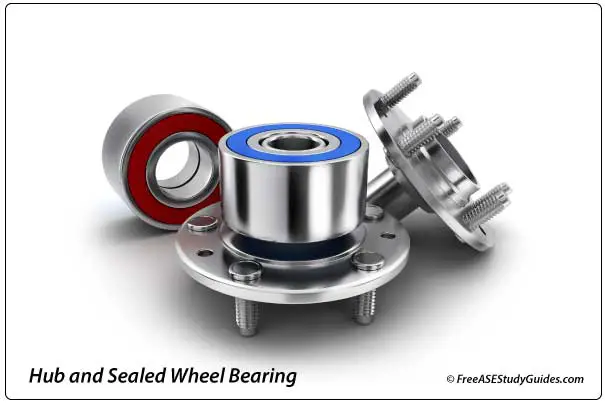
Sealed bearings are non‑serviceable units that are pressed into or integrated with the hub assembly. Because they cannot be disassembled or repacked, any internal wear requires complete replacement. To check for excessive play, grasp the tire at the top and bottom and rock it back and forth. Any measurable end play—defined as horizontal movement of the wheel—indicates a worn or defective bearing that must be replaced.
Tapered Wheel Bearings
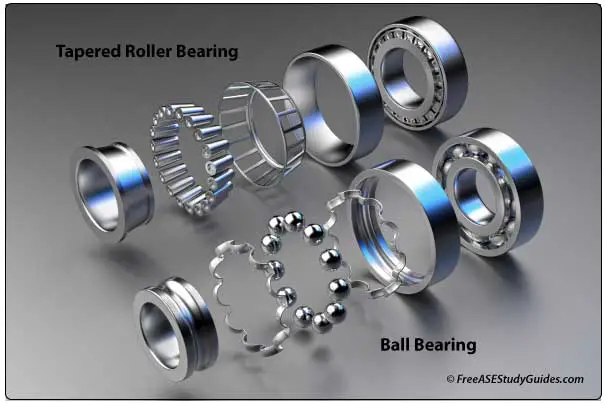
Tapered bearings may require a specific preload depending on the manufacturer’s specifications. These bearings are serviceable and should be periodically cleaned, inspected and packed with fresh wheel bearing grease.
A tapered wheel bearing may or may not require a specific preload, depending on the vehicle manufacturer’s specifications. Always refer to the service manual for the correct adjustment procedure. These bearings are fully serviceable and should be periodically cleaned, inspected, and repacked with the appropriate wheel‑bearing grease.
Wheel Bearing Diagnosis
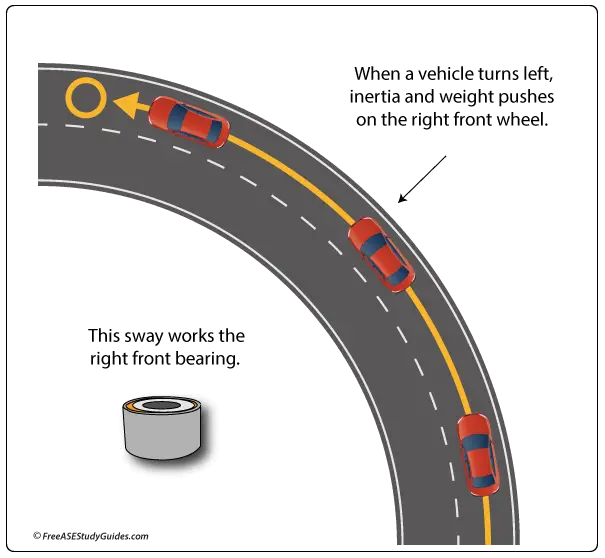
It can be challenging to tell which side has the faulty bearing. Listen for the change in pitch and intensity while turning. The wheel bearing opposite the turn gets worked more because the vehicle's weight is leaning on it. A faulty right front wheel bearing is loudest while making a left-hand turn.